Dr. Leonor Calderon: Leading with empathy and perspective
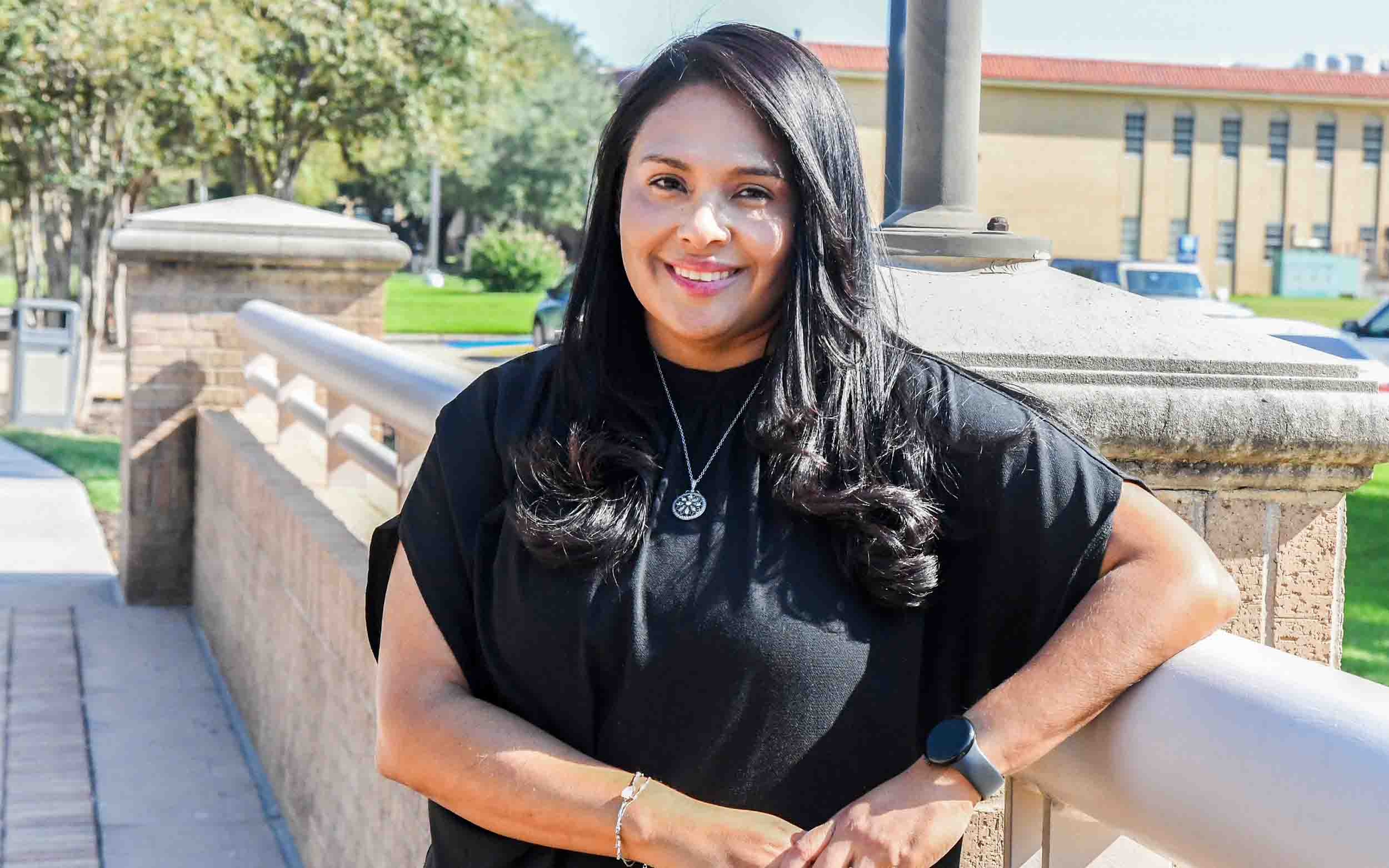
Dr. Leonor Calderon, fine arts, speech, modern languages, and physical education department chair at the San Jacinto College North Campus, brings passion and perspective to her role.
A first-generation college graduate, she's built her career on the belief that education has the power to transform lives. From her early days as a quiet student who found her voice through writing to becoming a leader dedicated to encouraging empathy and inclusion, Calderon has always been committed to community, culture appreciation, and the arts.
What is your educational background, and what brought you to San Jacinto College?
I have a bachelor's degree in English language and literature and a master's degree in rhetoric and composition/writing studies from Texas A&M International University. I also have an Ed.D. in community college leadership from Ferris State University.
My first teaching job after graduate school was as an adjunct at San Jac South Campus, where Joanie DeForest was my supervisor. She was incredibly supportive and encouraging and that created a positive first experience of higher education teaching. After teaching at two dual-credit high schools, I spent six years at Lee College as an English and humanities faculty member and interim division chair. I always kept San Jac in mind because of that positive experience, especially since it is part of my home community.
How did coming from a large family shape you?
I grew up with 10 siblings in my family, plus two nieces and a nephew my parents raised. Being number six and with that many people in one house, I was motivated to be creative, plus I think I was always a teacher at heart. In the summer, I would organize school for everyone, creating math, English, art, and PE classes and modifying assignments for different ages. I joke that my accommodation design was ahead of its time; a visionary, who is to say?
Coming from a massive family taught me how to navigate different personalities and balance competing needs, which absolutely helps in teaching and leadership.
What drew you to English and Humanities?
I was an introverted student, rarely speaking in class. But when given the opportunity to write, my voice and personality would come out, and teachers saw the potential. Great English teachers encouraged me to share my work and pushed me outside my comfort zone. One college professor even convinced me to audition for theatre arts, where I participated in a One Act Play, improv, and a musical.
I grew up extremely poor as a first-generation student with immigrant parents. Education was a way out, a way to a promising life. I understand the power of education and how a strong educator can impact a student positively. Teaching matters to me because I had mentors who told me, "You can do more; you can be more," and helped me flourish.
What obstacles have shaped your journey, and what did they teach you?
I had an English professor who accused me of plagiarism without proof. When I insisted my work was original, she said, "Well, somebody like you couldn't have written this." At such a young age, I did not realize I could report it—I did not know that was even a possibility. To this day, I wonder how many students she discouraged from continuing their education; how many dreams did she end.
I share this story with students to teach resilience because they will meet people who will try to tear them down, whether from misunderstanding, assumptions, or jealousy. Sometimes those voices come from their own family, saying, "People like us don't go to college." They must advocate for themselves and stay resilient.
Other obstacles shaping my journey reflect the intersectionality of my identity: a child of immigrants from poverty, navigating higher education as a first-generation student. I share these truths with my students to remind them that college is within reach—even for those whose backgrounds mirror my own.
What is your leadership philosophy?
I tell faculty that leadership is not just a title; they are always leaders, in the classroom and campus. I believe in having an open door, not just physically, but creating a culture where people feel comfortable expressing themselves and ideas.
I always tell my students to stay safe, healthy, and empathetic. The same applies to leadership. When I see the whole person, I humanize them, recognizing their complexity and humanity—and when issues arise, I remind myself it is usually something they are dealing with, not an attack on me.
My approach is to be there for people while respecting their humanity. I try to be open-minded because of the many perspectives and experiences around me. I encourage people to share their ideas because everyone has something to contribute.
How do you manage departments outside your expertise?
A good leader surrounds themselves with smart people. I work with the knowledgeable leaders in each department, asking for their opinions and insights. Everyone has been incredibly supportive at San Jac. I have even reached out to department chairs who serve similar areas, and they have been helpful and encouraging as well.
It is the same approach I use, even with English and literature - finding people strong in different areas like corequisite education or inclusion of artificial intelligence and collaborating with them to expand programs.
What are your thoughts on fine arts education?
Courses that allow creativity are crucial for developing more empathetic people. When students engage with arts from different cultures and backgrounds, it expands their minds beyond black-and-white thinking.
I have always been passionate about the arts, within my professional and personal lives, because creativity helps people understand different perspectives and possibilities. These subjects are extremely valuable to society. I cannot imagine a world without music or art.
What do you want the college community to know about you?
Since childhood, I have understood the power of education, particularly for students reflective of my background - first-generation, immigrant parents, low socioeconomic backgrounds. A sense of belonging is extremely important, and I am fortunate to have encountered educators who made me feel like I belonged and motivated me to reach greater capabilities.
I take my role and influence on students and the relationships I build with people seriously. Any role on a college campus impacts students; every interaction is crucial because you influence people somehow.
About San Jacinto College
Surrounded by monuments of history, evolving industries, maritime enterprises of today,
and the space age of tomorrow, San Jacinto College has served the people of East Harris
County, Texas, since 1961. The College is ranked second in the nation among more than
1,100 community colleges, as designated by the Aspen Institute and was named an Achieving
the Dream Leader College of Distinction in 2020 and 2026. As a Hispanic-Serving Institution
that spans five campuses, plus an online college, San Jacinto College serves approximately
45,000 credit and non-credit students annually. It offers more than 200 degrees and
certificates across eight major areas of study that put students on a path to transfer
to four-year institutions or enter the workforce. The College is fiscally sound, holding
bond ratings of AA+ by Standard & Poor’s and Aa2 by Moody’s. San Jacinto College is
accredited by the The Commission on Colleges and Universities.