How one professor’s journey is shaping the next generation of teachers

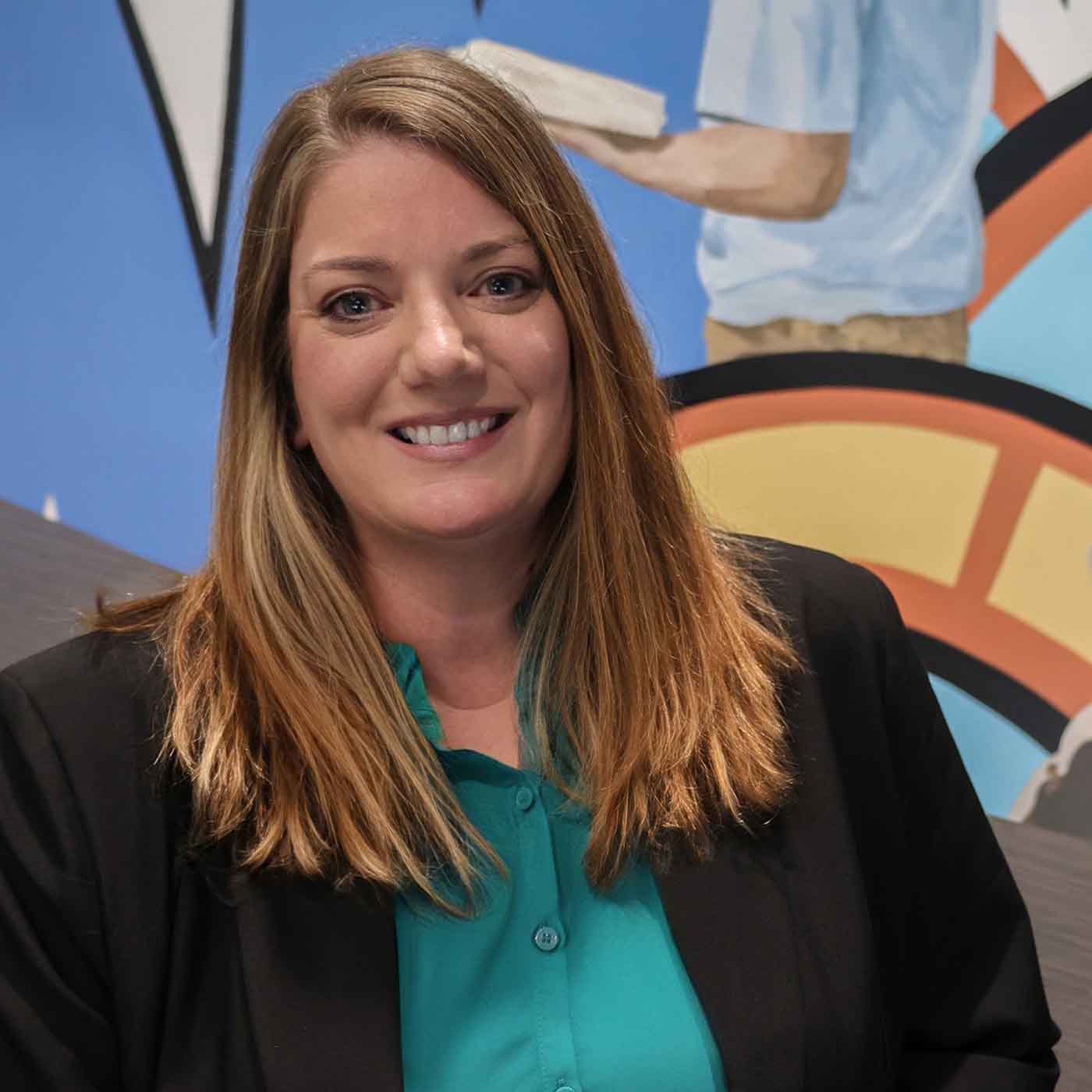
San Jacinto College Bachelor of Education professor Dr. Cheryl Mallant always knew she wanted to give back.
Growing up through her parents’ divorce, she leaned on her elementary school teachers for stability. Her grandfather, a high school track coach and principal, showed her what lasting educator/student relationships could look like.
“His students came to his funeral,” she said. “They always appreciated him and kept in touch.”
That example, along with the support Mallant received as a child, shaped her path. But so did something else: the understanding that not every teacher knows what it feels like to struggle.
“Teachers were my source of stability,” she said. “They cared. They made sure I had what I needed.”
Now in her 26th year in education, Mallant brings that perspective and empathy to San Jac, where she trains future elementary and early childhood educators.
“I think so many times I see educators that don’t have that empathy,” she said. “They don’t know what it’s like to go home and have the electricity turned off. I was able to be successful despite the setbacks and the hardships, and I wanted that for my students — and now for the teachers I’m training.”
Her career in education included nine years in elementary classrooms, teaching first through third grade and kindergarten, followed by 15 years as an assistant principal. Along the way, she completed her doctorate while working full time, a process that took seven years. She graduated in December 2005, understanding the workload and commitment of her current students.
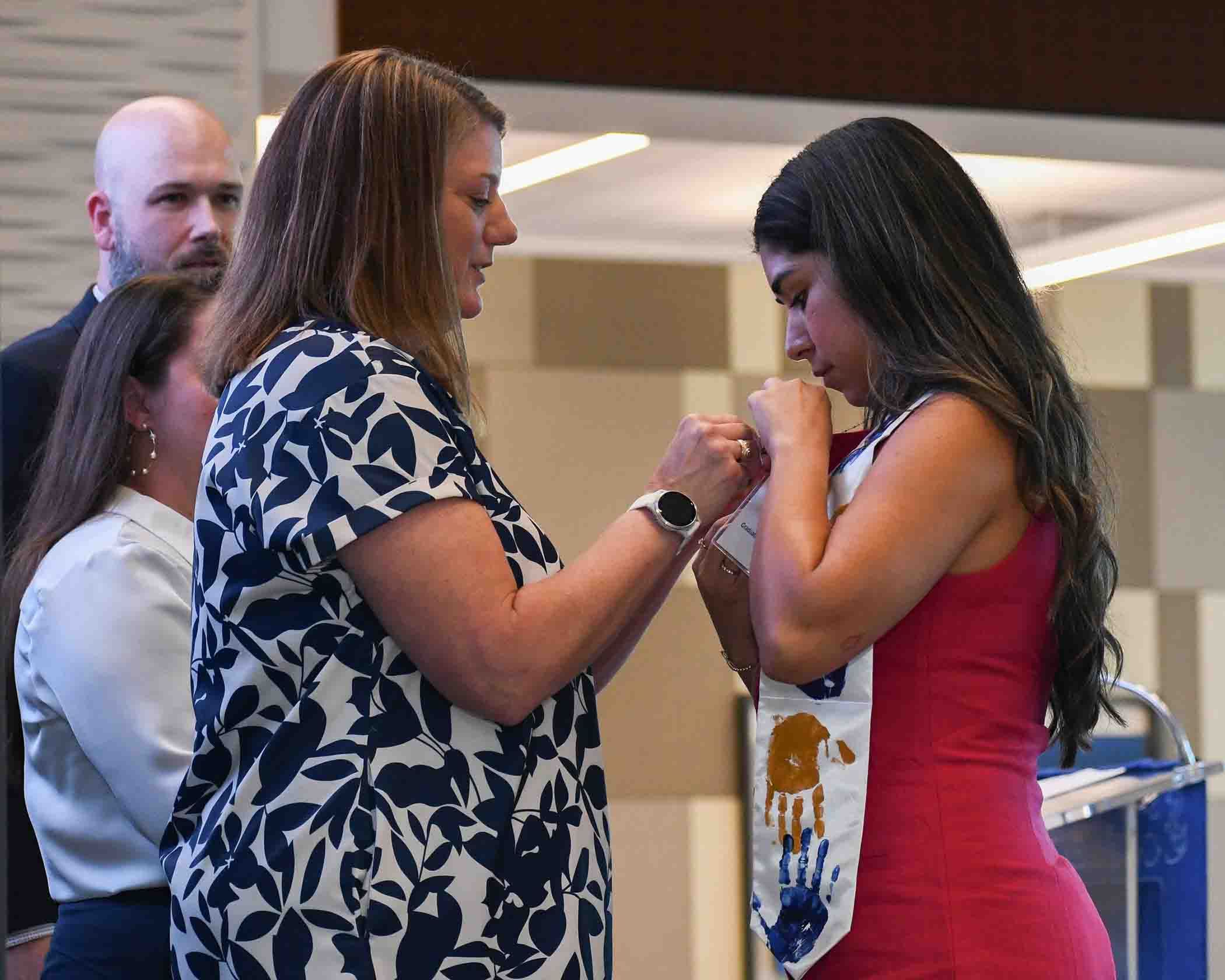
Mallant joined San Jac in April 2024 and, alongside Dr. Haley Ford, former San Jac education professor, built the program’s upper-level curriculum from scratch. The first courses launched that August.
“We were handed the syllabus and told to build the curriculum,” she said. “I couldn’t have asked for a better partner.”
The program serves working paraprofessionals and other adults seeking an affordable path into teaching. Courses are offered online and on students’ own time, designed to fit around full-time jobs. But Mallant and Ford were intentional about making the experience feel like more than a screen.
“We wanted it to be engaging — we’re not just talking at students,” she said. “The assignments are application-based. It’s more of a deliverable of ‘I’m showing you that you can put that learning into practice.’”
Some assignments push students outside their comfort zones, including weekly oral video reflections. She coaches students and explains that they’re going to have to interview with somebody.
“You’re going to have to be able to recall this information,” she said. “You can’t be reading off a script.”
Mallant makes a point of staying close to students despite courses not being face-to-face. She holds evening office hours so working paraprofessionals do not have to sacrifice their lunch breaks for meetings. She conducts field observations across the Houston area — from Fort Bend to Humble — coaching rather than criticizing.
During a recent visit, she watched a student lead a read-aloud. The lesson was strong, but the questioning stayed surface level.
“I suggested having students turn and talk, allowing them to develop language skills and social skills,” she said. “That’s a teachable moment.”
The support continues even after graduation, with Mallant helping former students navigate the certification process. One recent graduate, a former paraprofessional at Pasadena ISD, was named New Teacher of the Year shortly after earning certification.
“Seeing their success makes all the challenges worth it,” she said. “There’s a large number of people going into this profession for the right reason, and that excites me.”
For now, her focus remains on preparing her students for day one in the classroom.
“There’s nothing scarier than walking in that first day with 22 children looking at you,” Mallant said. “I want them to be able to say, ‘I know what I’m doing.’ The future is bright for children in the San Jacinto College community.”
Learn more about the bachelor of applied science in education
About San Jacinto College
Surrounded by monuments of history, evolving industries, maritime enterprises of today,
and the space age of tomorrow, San Jacinto College has served the people of East Harris
County, Texas, since 1961. The College is ranked second in the nation among more than
1,100 community colleges, as designated by the Aspen Institute and was named an Achieving
the Dream Leader College of Distinction in 2020 and 2026. As a Hispanic-Serving Institution
that spans five campuses, plus an online college, San Jacinto College serves approximately
45,000 credit and non-credit students annually. It offers more than 200 degrees and
certificates across eight major areas of study that put students on a path to transfer
to four-year institutions or enter the workforce. The College is fiscally sound, holding
bond ratings of AA+ by Standard & Poor’s and Aa2 by Moody’s. San Jacinto College is
accredited by the The Commission on Colleges and Universities.